The craft is coming back.
Everyone is asking the wrong question about AI and design.
The question isn't “will AI replace designers?” or “is design dead?”
The question is: “why did we ever accept that designers don't build?”
Designers used to build
Design engineering isn't new. It's how great products were always made.
Dyson built 5,127 prototypes with his own hands before the first vacuum shipped. He was an artist first, and at the Royal College of Art it went against the grain for a designer to also be an engineer. Designers were the ones who didn't get their hands dirty. He realized inventing and making, thinking and doing, could be one and the same thing. In his own words: “there was nothing that combined the two like design engineering does.”
He wasn't alone. The Eameses built their own furniture, and the machines to bend the plywood. Rams sat inside Braun's engineering, not next to it. The craftsman and the builder were the same person. That's where the magic came from.
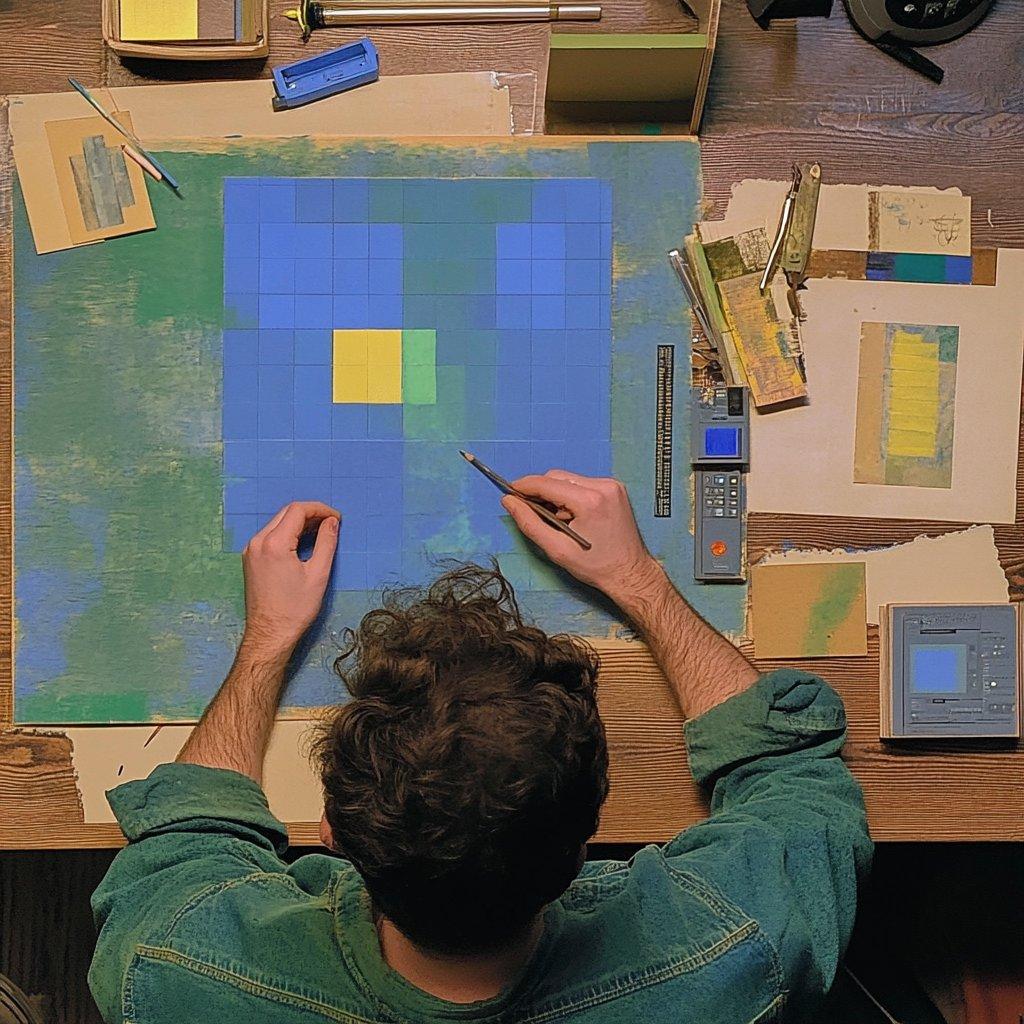
Then software came. Early software designers were engineers. Product team specialization ate design, and the tools split the person in two. Photoshop, Sketch, Figma. Each one made the picture better and moved the designer further from the product. “Product designer” became a job title for someone who never builds the actual product.
What the split costs
Today, designers draw what a feature couldlook like. Engineers build it. That gap between the design and engineering is where weeks dissapear. It's where talking and waiting replaces shipping.
We've watched it kill weeks and even months per feature. The process of going from idea to production is nonsensical. Weeks spent in Figma on static frames, documentation, engineering queue, design QA rounds. We got used to it so incrementally that the absurdity became normal.
This process is ancient. The good news is that AI can finally kill it.
Almost everyone gets AI wrong
The point of AI is not to eliminate the craft. While useful in early exploration phase, it won't replace the actual design process. What it will eliminate is the handoff. The goal is to bring back the world where designers build. Where designers are design engineers again.
The fear is real. Every designer has read the “design is dead” posts. But the designers who win this transition aren't the ones who prompt best. They're the ones who ship. The ones whose work gets merged, not presented. AI doesn't replace that designer. It creates them.
2026: hype, no substance
Earlier this year the space exploded. New tools everywhere, big hype, big claims. Yet almost nothing serves real production environments where designers actually ship. Most builders chase the wrong thing: replacing the craft or simply not going deep enough to deliver actual value.
Prompting sucks. Burning tokens with not much to show for it sucks. Not being able to share outputs sucks.
The experience of building in code is currently terribly fragmented and still gets you to 60% fidelity with mostly prompting. Canvas tools, MCP servers, agents, localhosts is a setup headache before you've designed anything.
Git management, environment setups, low-level code. Design engineers shouldn't have to learn any of that. It's a distraction from shipping. Design engineers should learn how to manipulate code with AI in a way which delivers the design in a form of production grade software.
And no, engineers aren't getting replaced from this process either. Waiting is.
The holy grail is production
The holy grail of AI in design is the production environment.
Just like agents write code for devs that gets merged, it's the frame designed by a designer that gets implemented. It's the prototype built with full adherence to the design system. It's the agent that is constrained by the design tokens and doesn't overwrite them. It's designing in the real product, with real data. It's one place where design engineer can go from canvas to code in one shot. It's a workflow that gets you from 0 to 90% production-fidelity outputs with designing, not prompting. It's the design QA that happens in code instead of Figma annotations.
It's the one iteration designers take themselves, instead of waiting for devs, fixing stuff, and managing communication that should never have existed in the first place.
This is design engineering. Not a new discipline, but the oldest one. We're moving into a new phase of product development where the craftsman and the builder becoming the same person again.
The future of design is in code with zero handovers and a unified design workflow.
Why Modeinspect
This is why we're building a place where design engineers design with visual controls and build with AI, on the real codebase. A place where craft is elevated and handoff dies.
Designers were never meant to just draw. Our mission is to give them their hands back.